Product, UX, Game design, Art direction, AI prototyping, Hosting
Opportunity
How might we turn family game night into something my kids help build, where everyone plays together on one TV using the phones already in their pockets, with no consoles, extra controllers or app installs?
Solution
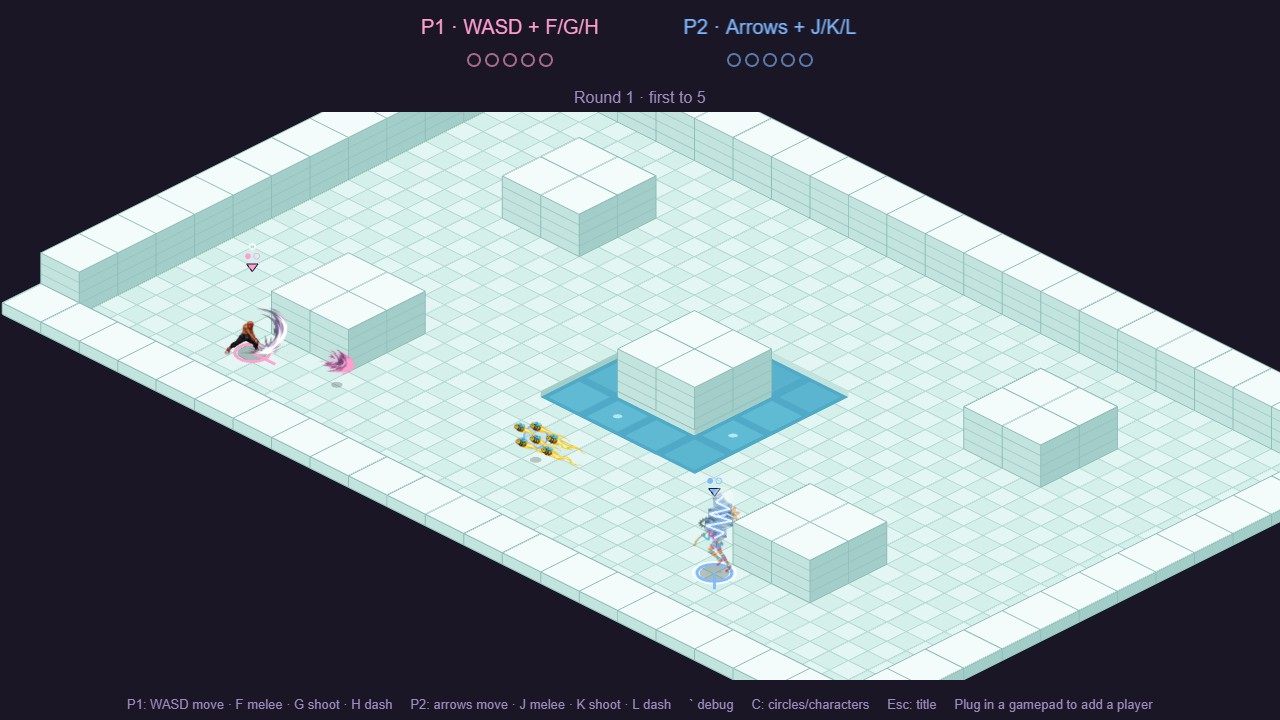
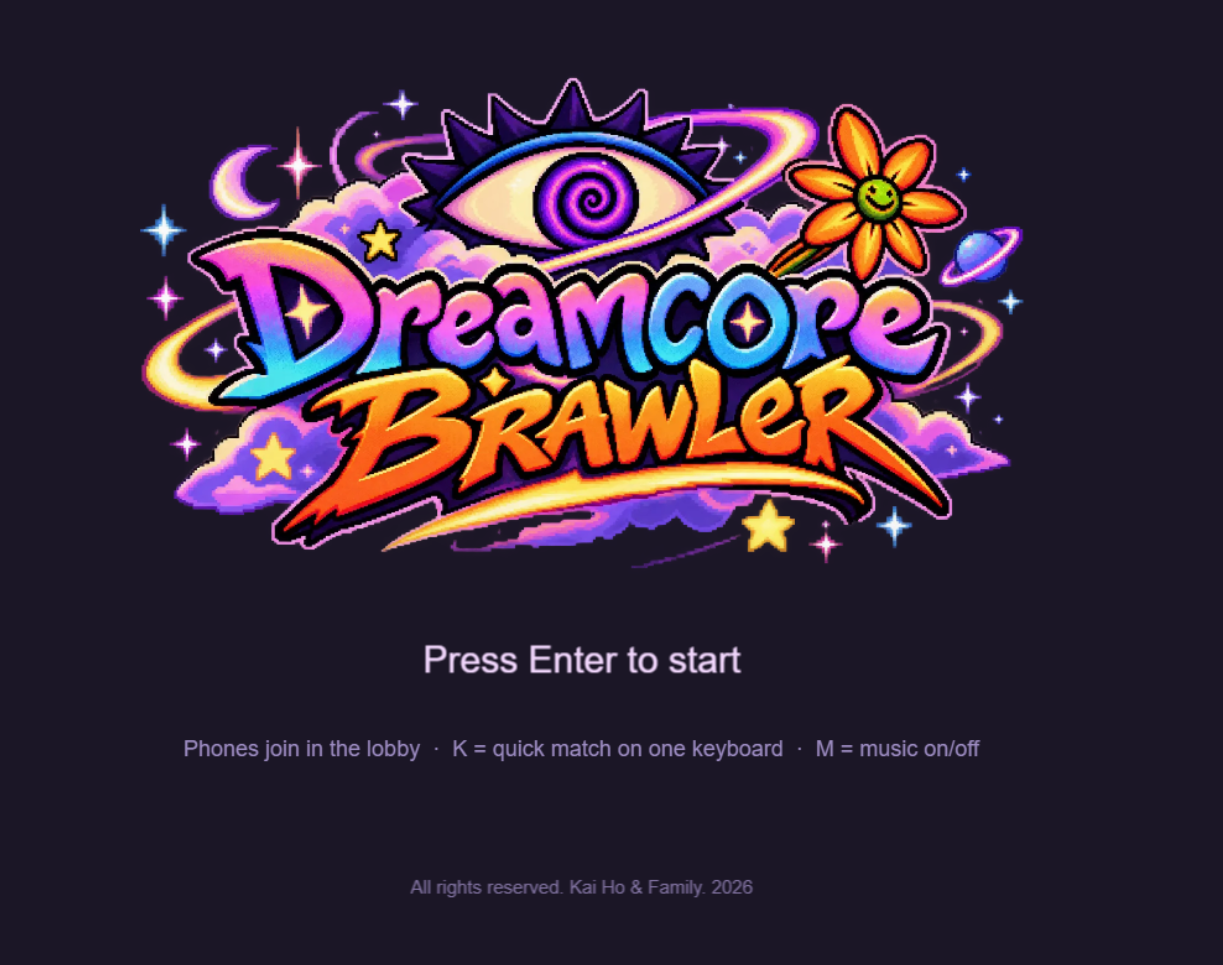
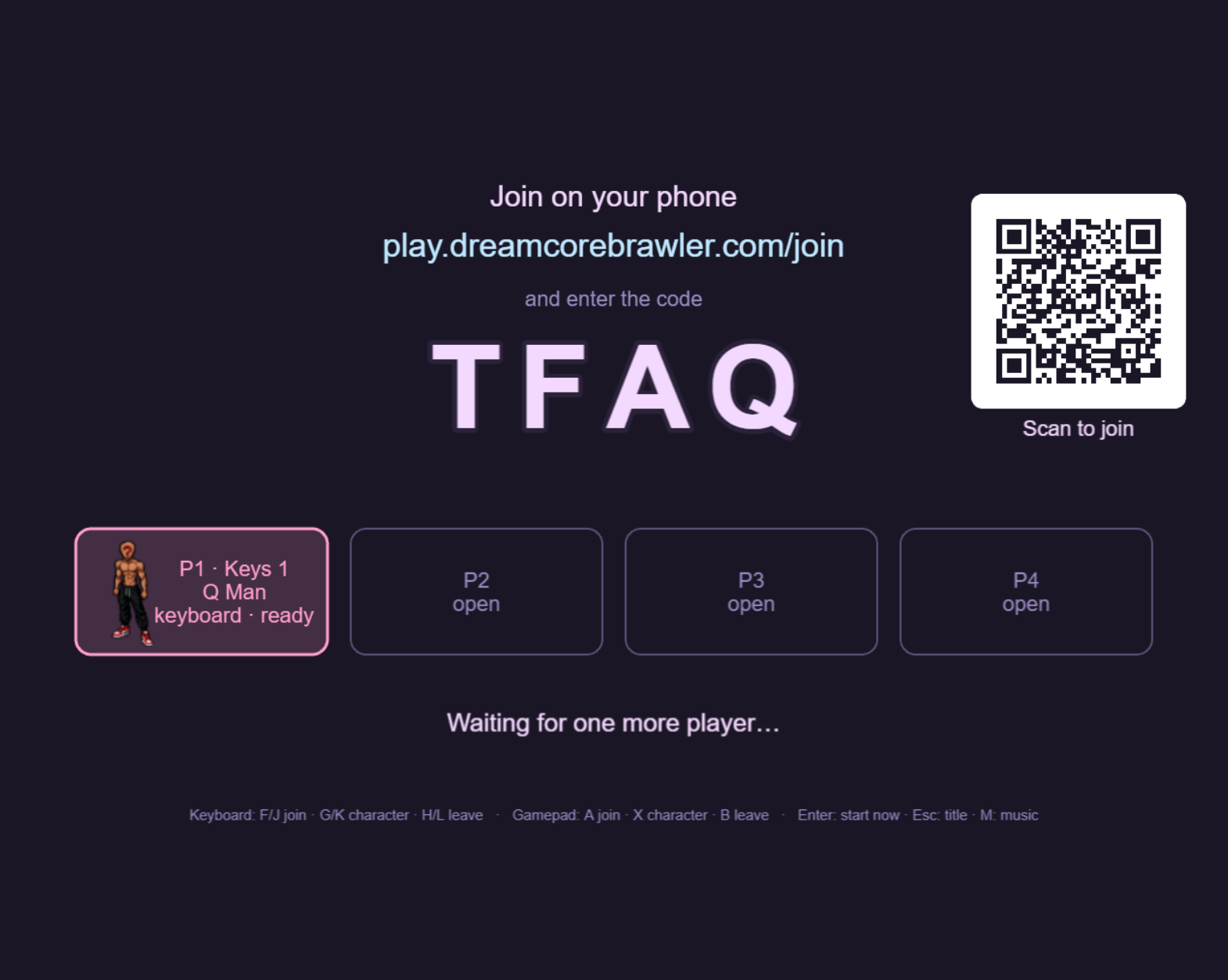
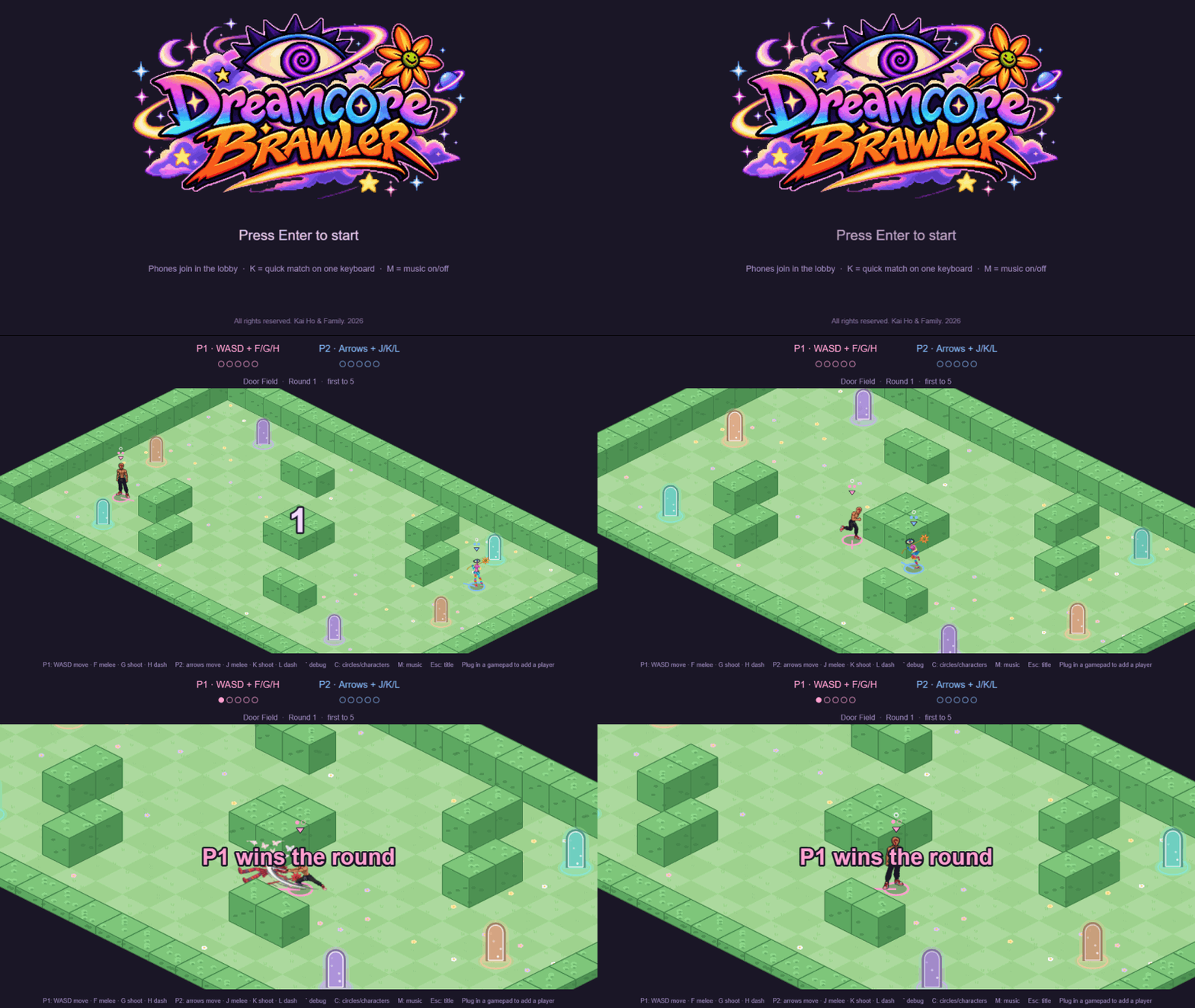
A party brawler for one TV and up to four phones. Players scan a QR code, their phone becomes the controller, and rounds last about 30 seconds, so nobody waits long to get back in.
Project Summary
I designed and shipped Dreamcore Brawler end to end with my kids. They created the characters, I learned AI tools to turn their ideas into animated sprites and sound, I directed the build with Claude Code, and I set up the server, hosting and DNS so anyone can play in a web browser.
Timeline
3 days, Nov 22–24, 2026
Outcomes
In three days the game went from a written plan to a live site that friends can open on their own TV and phones.
Playable by anyone: open the game in a browser on a TV or laptop, scan the code with a phone, and play. Nothing to install.
A cast my kids made: Q Man and Eye Lash each have their own run, melee, shot, dash and death animations, plus sound for every move.
Built to keep growing: 53 small, tested changes and 159 automated tests, so new characters and stages don't break what already works.
Smooth on a real TV: after it stuttered on a Fire TV browser, I cut the heaviest stage's drawing work about 11 times without changing how it looks.
Designing with my kids
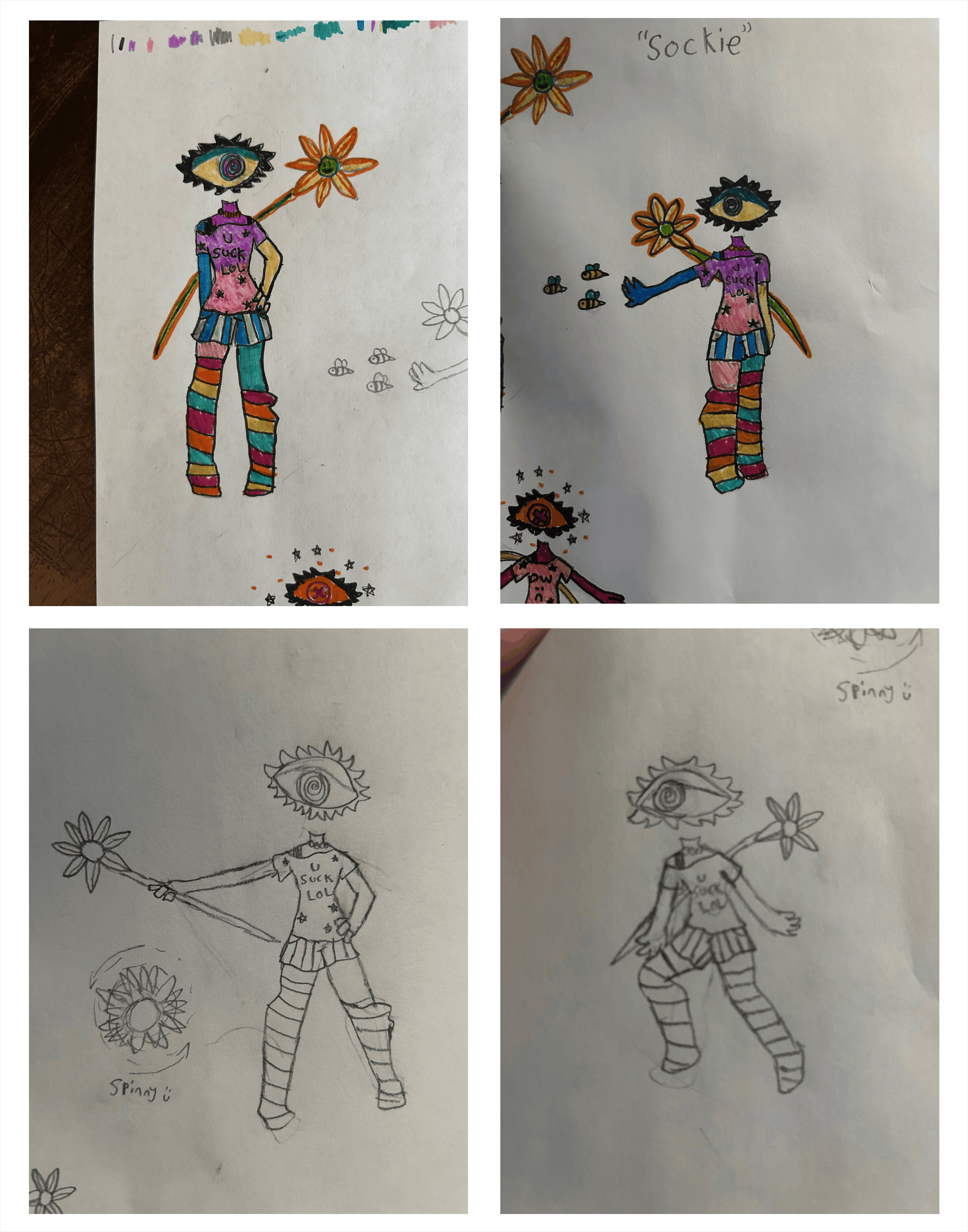
My kids are the character designers. They dreamed up Q Man and Eye Lash, sketched them by hand and decided how each one fights. My job was to protect their ideas while turning them into something a game can use.
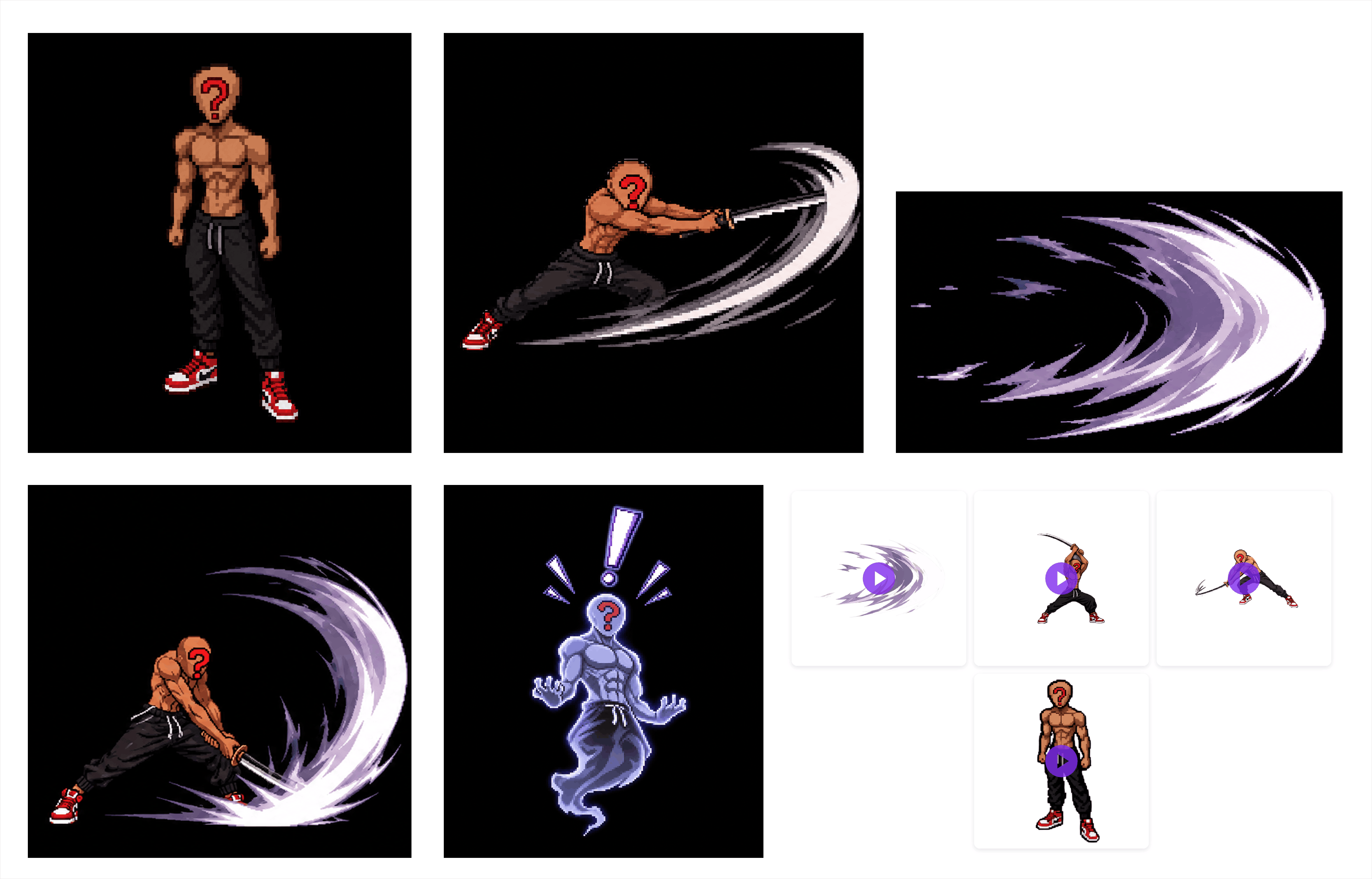
Q Man: a red question mark for a face, a katana slash and a crescent sword-wave shot. When he loses, his ghost floats out of his body.
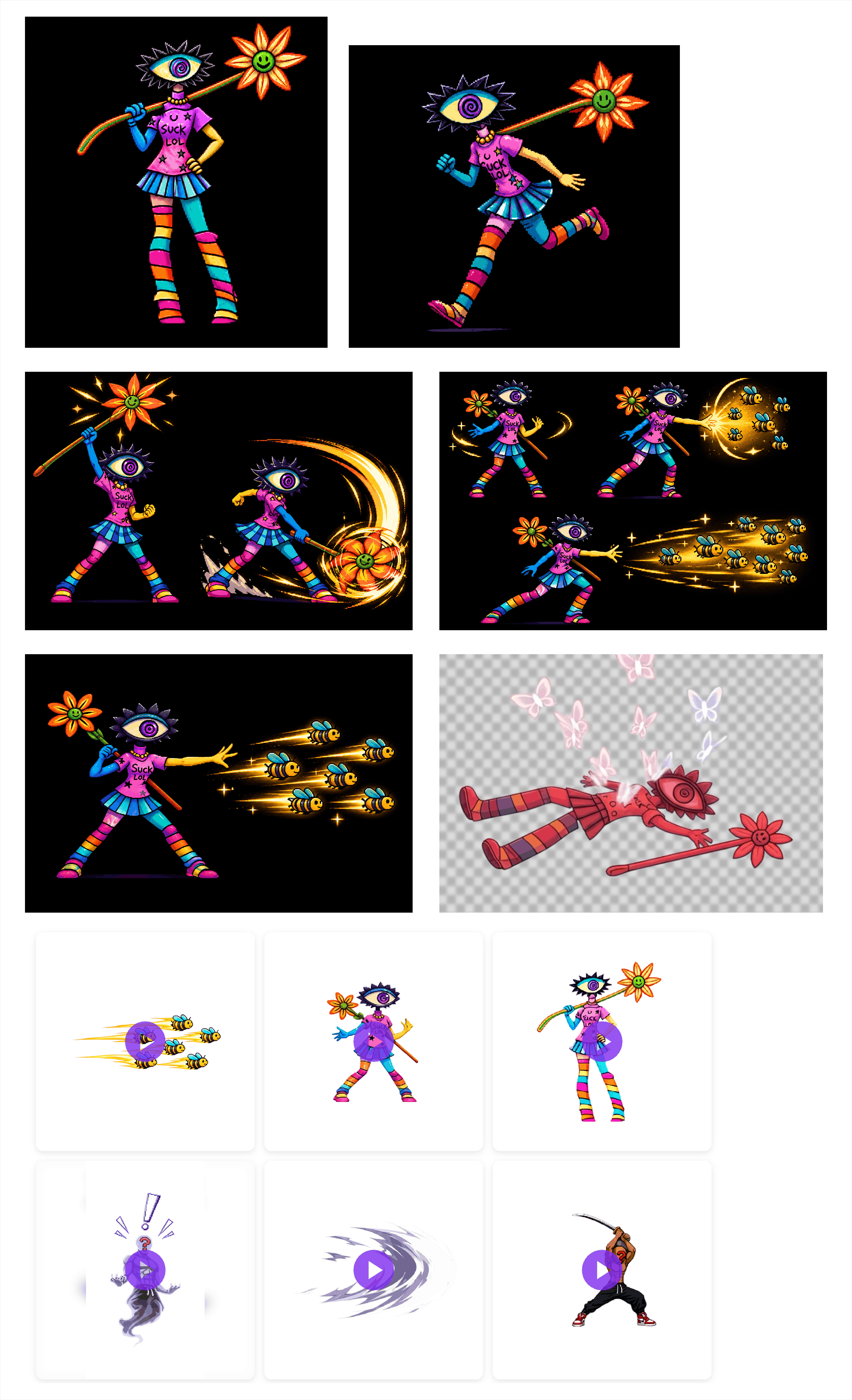
Eye Lash: one giant eye, a flower staff, a bee-swarm shot and a dash that turns her see-through like a teleport. When she loses, she falls and butterflies rise.
Their sketches, my prompts: I turned each drawing into prompts for an AI animation tool and we compared the results to the sketches until they matched what the kids pictured.
Naomi's character sketch
Characters digitized
Rhemi's character sketch
Learning new AI tools
I'm not an illustrator, an animator or a game developer, so I learned the tools that let me work like one.
AI animation: I generated pixel-art sprite sheets for every move (run, slash, shoot, projectile and death), plus the sound clips that go with them.
Fitting AI output into a real product: every sheet came back at its own size, framing and facing. Eye Lash's run faced left while her attacks faced right, and her melee was drawn about 30% smaller than her run, so I had it scaled to match and she no longer shrinks mid-swing.
AI as my engineering partner: I wrote the product plan, with design pillars and milestones that each end in something playable. Claude Code built it in small, tested steps, and I playtested after each one before moving on.
Sound that feels right: I trimmed silent starts so hits sound instant, gave Q Man an electric zap on his dash and gave Eye Lash a soft poof that fits her teleport.
Designing for the people on the couch
The best moments came from watching people play and removing whatever got in their way.
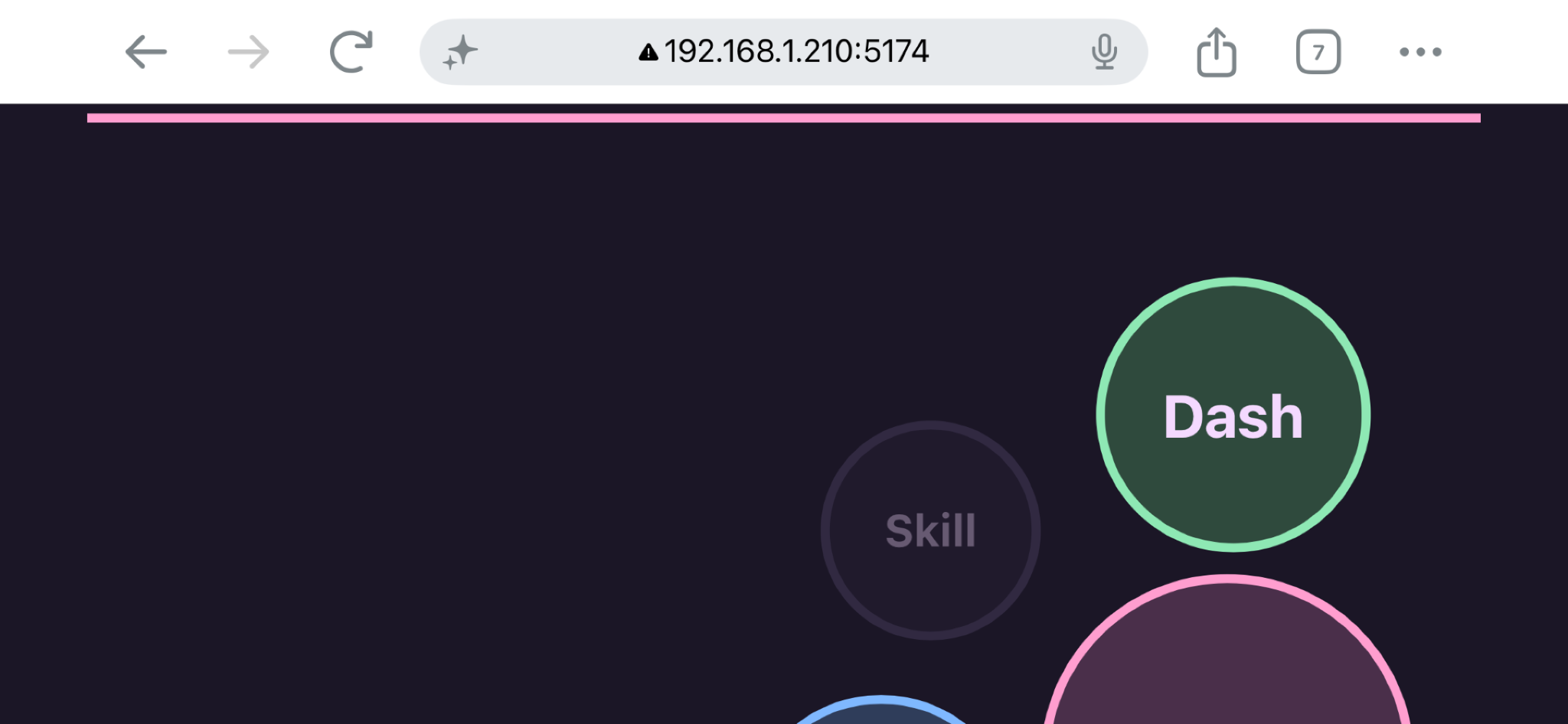
Accidental zoom: tapping the attack button quickly made iPhones zoom into the page, so the controls slid out from under players' thumbs mid-fight. I locked zoom while the controller is on screen. It's a small fix, and nobody notices it now, which is the point.
Discovered a zoom bug when we tried to play on our phones
No more typing a long web address: every new player had to type the full URL on a phone keyboard. The TV lobby now shows a "Scan to join" QR code with the room code built in, so players scan and type only their name. I also shortened the address shown on screen for anyone who'd rather type.
Phones fall asleep: if a phone locks or drops out, that player keeps their spot for 30 seconds and goes straight back in when they reopen the page.
Fair, readable fights: every attack shows a short windup, and shots draw an aim line on the floor, so younger players can see what's coming and react.
Quality on every screen: I wanted the game to look the same on a laptop as on a TV. Instead of lowering quality for the TV, the floors and walls are now drawn once per match rather than every frame.
End-to-end: hosting and DNS
I wanted friends to be able to play from their own living rooms, so I took the game all the way to a live site myself.
Choosing hosting: I compared low-cost options and reused a Bluehost VPS I already had, so going live cost nothing extra.
Changing course: the server came with cPanel but no license to run it. Rather than pay for a control panel I didn't need, I reinstalled a clean Linux server and set it up over SSH.
One address for everything: the TV game, the phone controller and the connection between them all live, with automatic HTTPS.
DNS: old placeholder records at the registrar couldn't be edited at first, so I launched on a subdomain, then moved to the main domain once they were fixed. The www address redirects there.
One-command releases: each release runs the tests, builds the site, keeps the previous version as a backup and then checks that a phone can really join a room on the live site.
Design decisions
One joystick and three buttons, because nothing should need precise aiming on a glass screen.
Phones only send input and the TV runs the game, which keeps lag low and hosting close to free.
One hit wins a round and rounds are short, so the stakes are clear and losing doesn't sting for long.
A melee swing reflects shots back, so skill and timing beat button mashing.
A web page instead of an app, so a guest can join in seconds.
Stages are picked at random each match to keep rematches fresh.
Challenges
Inconsistent AI output: sprite sheets arrived at different sizes and facings, and some carried watermarks, so each one needed checking before it went into the game.
Low-power TV browsers: what ran smoothly on a Chromebook stuttered on a Fire TV, so I measured frame times on the TV and fixed the real bottleneck.
New territory: servers, licenses, certificates and DNS records were all new to me.
Scope: I postponed power-ups so we could ship stages and online play first, which got real people playing sooner.
Collaborations
My kids were the creative directors. They own the characters, and their reactions during playtests decided what stayed.
Claude Code was my engineering partner. I set the product direction, the rules and the quality bar, and reviewed every change in play before moving on.